
Essential Real Estate Investment Strategy to Drive Tax Savings
are you leaving money on the table…
Investing in commercial or residential real estate is a powerful wealth-building strategy, but like any business venture, it comes with tax obligations. Fortunately, real estate owners can employ strategies to minimize these tax payments and increase cash flow. One of the most effective strategies is conducting a cost segregation study on their properties.
Cost segregation is a tax strategy that enables property owners to accelerate depreciation deductions on their federal tax returns. When a property is purchased, constructed, or renovated, the owner can claim a depreciation deduction to account for the property’s “wear and tear.” Typically, real estate is depreciated over 27.5 years for residential properties and 39 years for commercial properties to reflect obsolescence and aging. However, if a property’s depreciation is only spread across the 27.5 or 39-year period, it’s likely that significant tax savings are being left on the table.
cost segregation and how it works
A cost segregation study addresses this issue by reclassifying portions of the property into shorter depreciable lives—typically 5, 7, or 15 years. This study is conducted by an engineer who breaks down the property into its individual components, classifies each one according to the correct depreciation life, and ensures that all applicable tax guidelines are met. Given the complexity of the analysis, it’s essential to work with an expert who understands both engineering and tax law.
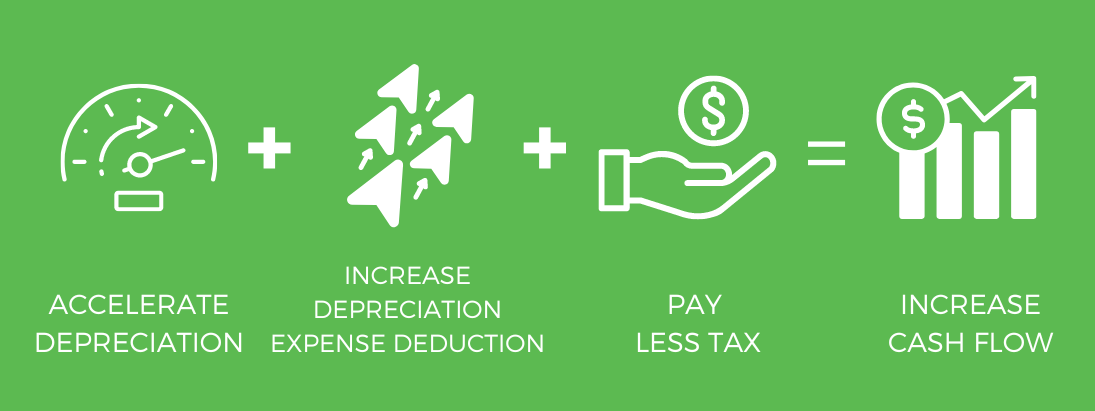
Classifying a property’s components into shorter life categories increases depreciation deductions in the earlier years of ownership. This reduces taxable income, lowers tax payments, and improves cash flow. Property owners can then reinvest those savings into their business or use them to reduce debt and improve financial stability.
Certain types of properties are particularly well-suited for cost segregation studies, including:
- Multifamily properties
- Auto dealerships
- Office buildings
- Manufacturing facilities
- Hospitality properties
- Distribution centers
- Self-storage facilities
- Retail spaces
- Healthcare facilities
- Data centers
at align, expertise matters
Cost segregation studies are fully supported by the IRS when conducted properly. To ensure compliance and accuracy, it’s essential to work with an expert who has a background in both engineering and tax law. The intricacies of depreciation rules and tax regulations make it crucial to partner with a qualified firm like Align Tax Consulting to avoid potential IRS issues.
The return on investment (ROI) for a cost segregation study is often substantial, with many property owners seeing their investment in the study pay off many times over in tax savings. A reputable provider will typically offer an initial analysis to estimate the potential benefits and associated costs, often at no charge. Consulting with an expert is recommended to ensure that tax savings are fully maximized.
next steps
If you believe a cost segregation study could benefit your business, Align Tax Consulting is here to help. Contact our team to explore how this powerful strategy can help optimize your tax situation and boost your bottom line. Interested in seeing how cost segregation works in a real-life case study? Click below to learn more.
